Ready to help treat your pet to a healthy life?
Kitten Milestones: A Timeline of Their First Year
By : Nikki Edwards | Published Oct 1, 2026

Somewhere between the first wobbly steps and the first solo litter box trip, your kitten turns into a cat. It happens fast, and most of it happens in the first year: senses sharpening, teeth coming in and falling out, energy levels that seem to double overnight. This timeline walks through what's normal at each stage, so you know when to relax and when to call the vet.
Birth to 2 weeks: Neonatal needs and early signs
Development
Newborn kittens are born with their eyes and ears sealed shut and can't regulate their own body temperature. Weight gain is the clearest sign of healthy development at this stage: a kitten should gain steadily every day, and any stall or drop is worth watching closely. Reflexes like rooting and the ability to right themselves develop within the first days.
Feeding and handling
Mother's milk provides both nutrition and antibodies a kitten can't get any other way, so nursing kittens should stay with their mother whenever possible. If bottle-feeding is necessary, kitten milk replacer and a proper feeding schedule matter more than volume. Handling should be brief and gentle. Kittens this young are entirely dependent on their mother or caregiver for warmth, since they can't regulate their own temperature yet.
When to call the vet
Contact a vet right away if a kitten isn't gaining weight, seems dehydrated, feels cold to the touch, or has any trouble breathing. Kittens can decline quickly at this age, so waiting to see if things improve on their own isn't a safe bet.
What to expect (behavior)
Kittens at this stage mostly sleep and nurse. There's no real personality to see yet, just a lot of squirming toward warmth and food.
3 to 5 weeks: Senses, mobility, and the start of socialization
Development
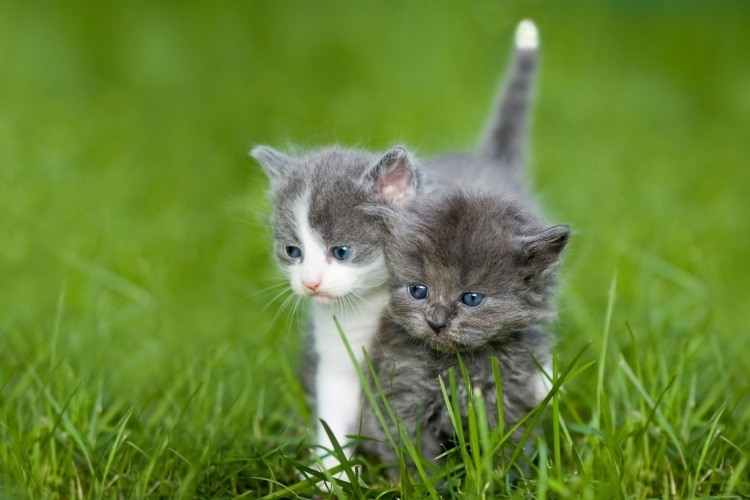
Eyes open around this stage and hearing sharpens quickly after. Kittens take their first shaky steps and start figuring out how their legs work, and this is also when litter box introduction typically begins, often by copying their mother's habits.
Socialization
Time with littermates and mother teaches early social skills, including the beginnings of bite inhibition. Rough play between siblings is normal and is actually how kittens learn to soften their bite.
Nutrition
As mobility improves, kittens start showing interest in food beyond nursing. Supporting this transition means offering age-appropriate food on a consistent schedule rather than rushing the process.
What to expect (behavior)
Expect clumsy exploring, short bursts of curiosity, and a growing interest in littermates and surroundings.
6 to 12 weeks: Weaning, vaccinations, and learning cat skills

Development
Weaning typically wraps up in this timeframe, with kittens gradually shifting from milk to wet and then dry food textures.
Vet care and vaccine schedule
A first vet visit usually happens around 6 to 8 weeks. A general starter schedule looks like this:
- 6–8 weeks: First FVRCP vaccine (feline viral rhinotracheitis, calicivirus, panleukopenia)
- 12 weeks: Second FVRCP dose
- 16 weeks: Third FVRCP dose and rabies vaccine
Deworming typically starts around 3 weeks and continues every two weeks until 8 to 9 weeks, then monthly until 6 months, alongside a conversation about flea and parasite prevention.
Play and enrichment
Play at this age isn't just cute, it's how kittens practice hunting and learn social boundaries. Safe toys and supervised play sessions give them an outlet that doesn't involve your hands or ankles.
What to expect (behavior)
Kittens become noticeably more playful and social, testing boundaries with siblings and starting to show individual personality.
3 to 6 months: Rapid growth, training, and first procedures
Development
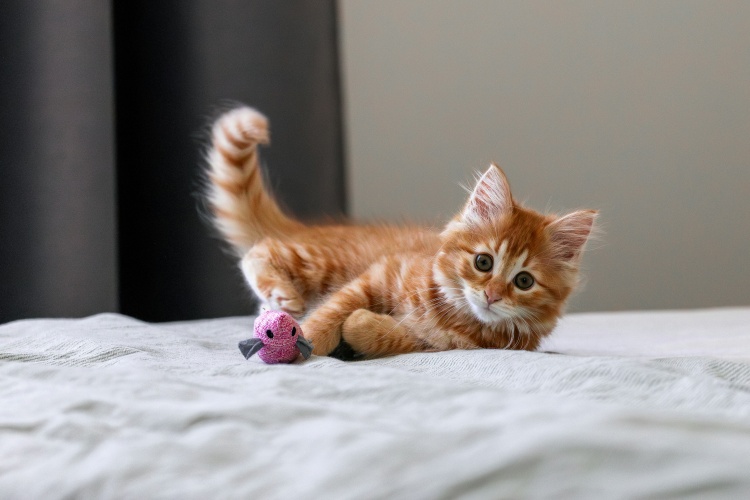
This is a growth spurt stretch. Baby teeth begin falling out and adult teeth start coming in, which raises calorie needs to support the growth happening during this stage.
Training and habits
Litter box consistency matters more as kittens get more independent, and this is a good time to introduce scratching posts before furniture becomes the default target, since scratching is normal cat behavior that needs an outlet instead of a correction. Redirecting rather than punishing tends to work best.
Vet care and spay/neuter
Most vets recommend spaying or neutering around 5 to 6 months of age, though your vet will factor in your kitten's individual health and development. This is also a good time to talk through what to expect from pre-op care and the procedure itself.
What to expect (behavior)
Social play tends to peak around 3 months, making this one of the most active, playful stretches of the whole first year.
6 to 12 months: Adolescence, behavioral changes, and ongoing care
Development
Most kittens are close to their adult height by 9 to 10 months, though many keep filling out until closer to age 2. Larger breeds like Maine Coons, Ragdolls, and Norwegian Forest Cats often take longer to finish growing than the average cat.
Behavior and enrichment
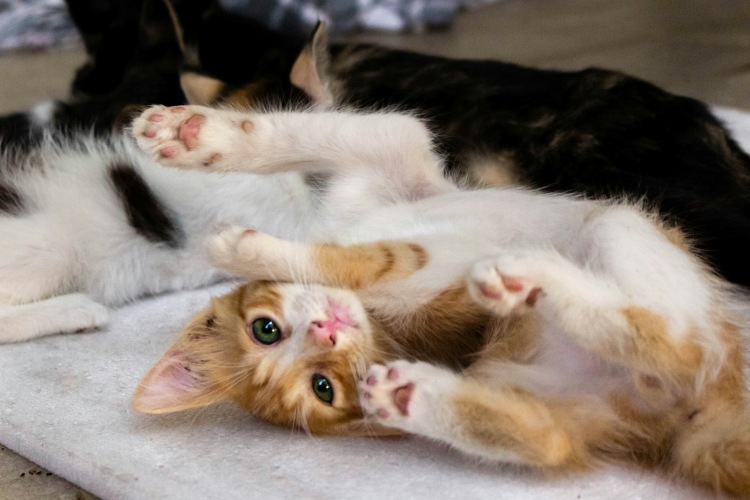
Energy and independence both increase through this stage. Zoomies at odd hours, climbing, stalking, and chasing are all normal predatory-style play, not a sign anything's wrong. Scratching posts, cat trees, and daily interactive play give that energy somewhere to go and help curb unwanted scratching or nighttime wildness.
Vet care
Adult vaccine boosters, ongoing parasite control, and microchipping (if not already done) typically happen now, along with establishing a regular wellness visit routine.
Diet
Most cats transition to adult food around the one-year mark, though the right timing depends on breed, health, and your vet's recommendation.
What to expect (behavior)
Somewhere between 9 and 14 months, kittens start settling into routines and their adult personality becomes more visible. Play and curiosity don't disappear, they just get a little steadier. If your kitten's energy drops off suddenly, it's worth a call to the vet rather than assuming they're just growing up.
When to see a vet
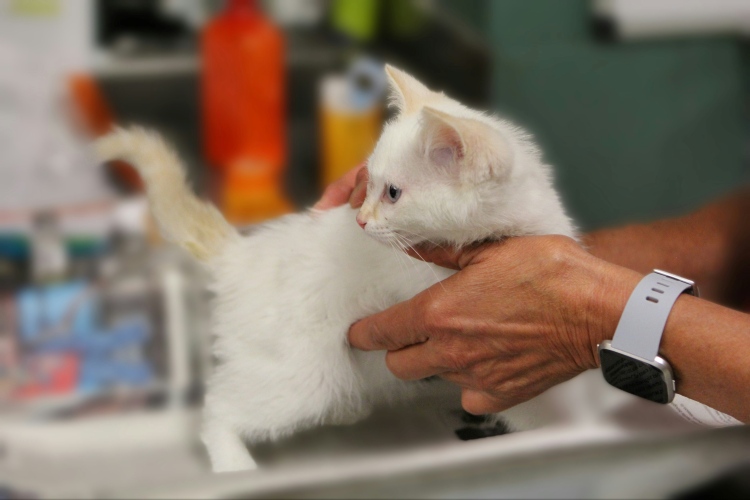
Contact your vet immediately if you notice lethargy, vomiting, diarrhea, or any sign of breathing trouble. These can point to something more serious, and kittens don't always show illness the way adult cats do.
The importance of early pet insurance
A kitten's first year comes with a lot of unknowns, and vet bills for an unexpected illness or injury don't wait for a convenient time. Enrolling early, before anything can be pre-existing, means fewer conditions get excluded down the road. For a stage of life this unpredictable, this is the kind of coverage that actually goes the distance. Learn more about kitten insurance.
Frequently asked questions
When do kittens start using the litter box?
Most kittens start using the litter box on their own around 3 to 4 weeks old, often by watching their mother or littermates. A low-sided box with unscented litter makes the transition easier.
Wet food or dry food for kitten development?
Both play a role. Wet food adds hydration and is often easier for young kittens to eat during weaning, while dry food supports dental health as adult teeth come in. Many vets recommend a mix of both, adjusted as your kitten grows.
What are common kitten health problems to watch for?
Intestinal parasites, upper respiratory infections, and fleas are among the most common issues in the first year. Poor nutrition and untreated parasites can also affect growth, which is part of why regular vet visits matter so much during this stage.
When do kittens stop growing?
Most cats reach close to their adult height by 9 to 10 months, but many continue filling out until around age 2. Genetics play a big role here. Larger breeds tend to take longer to reach full size than the average housecat.
Additional tips for kitten parents
Keep the litter box clean and in a quiet, accessible spot, since kittens are more likely to avoid a box that feels unsafe or crowded. Offer a variety of enrichment, scratching posts, climbing structures, and interactive toys, to support both their body and their curiosity. Stay consistent with vet visits even when nothing seems wrong, since a lot of early health issues are easier to catch than to treat. And keep in mind that play and exploration aren't a phase kittens grow out of by their first birthday. According to AAHA feline life stage guidelines, cats are considered kittens through age 1, and that playful, investigative streak is a normal part of who they are, not something to train out of them.
Pet Parenting is the official dog and cat blog of Trupanion, a leader in the world of pet insurance. Here you’ll find useful dog and cat care tips, important veterinary insights, and an abundance of pet lifestyle topics. All of our articles are written by real humans with a love for pets, not AI. However, please note that the views expressed here are those of the individual authors and do not necessarily reflect those of Trupanion. Articles are reviewed by veterinarians for accuracy, but they are not a substitute for professional diagnosis and treatment. Always consult with your own pet’s veterinarian for advice.


