Ready to help treat your pet to a healthy life?
How Hot Is Too Hot to Walk a Dog?
By : Kathleen Crampton | Published Aug 17, 2026

Giving your pup proper exercise is important year-round, but as the temperatures heat up, you're likely wondering how hot is too hot to walk a dog? There is actually no set temperature too hot for dogs, as safety depends on several factors, such as humidity, wind, surface temperature, and your pet's health, age, and breed.
It can be challenging to not have a specific outside temperature as a gauge for knowing whether it's safe to walk your dog. But that's why we've created this reference—so that you have the knowledge and resources to help determine what's appropriate for your pup.
Why air temperature does not tell the whole story
You're ready to walk your dog and you check the current temperature: 75 degrees Fahrenheit. Sounds like the perfect temp, right? But don't grab the leash just yet. While 75 degrees might sound nice to you, it could be too hot for your pet. Here's why.
Air temperature shouldn't be your only gauge as to whether you can walk your dog. Other factors include humidity, opportunities for shade, wind, radiant heat, and surface temperature.
- Humidity: Higher levels of humidity can make it feel hotter than the temp you see on your weather app. According to the National Weather Service, this means that an 80-degree day with 90% humidity could feel like 86 degrees. Higher humidity also plays a part in your pup's ability to stay cool, as more water vapor in the air can prevent their body from cooling down as easily through panting and sweating through their paw pads.
- Shade: How much shade will you encounter on your walk? Shaded areas, such as under trees and awnings, don't get as hot as areas that have direct sunlight.
- Wind: A warm summer breeze can help you and your pup cool off, but it doesn't have the same effect as cold wind during the winter. That's because, according to The Weather Channel, the actual temperature plus humidity are what really determine how hot or cool it feels.
- Radiant heat: Radiant heat refers to different surfaces making the surrounding air feel cooler or warmer. For example, areas with a lot of asphalt will feel warmer than grassy areas because asphalt absorbs more heat and radiates it back into the air. So, if you're walking dogs in hot weather and in areas with mostly asphalt or concrete, take caution because it will likely feel much warmer than the actual temperature.
- Surface temperature: Different surfaces will also have different temperatures. Similar to radiant heat, asphalt, cement, and red brick will feel much hotter to the touch than grass—even if the grass is in direct sunlight. (However, be cautious around synthetic turf, which can get just as hot as, or hotter than, asphalt.)
So, when is it too hot to walk a dog? Let all of these factors—plus your dog's breed, age, and health (discussed below)—be your guide.
How to check whether pavement is too hot
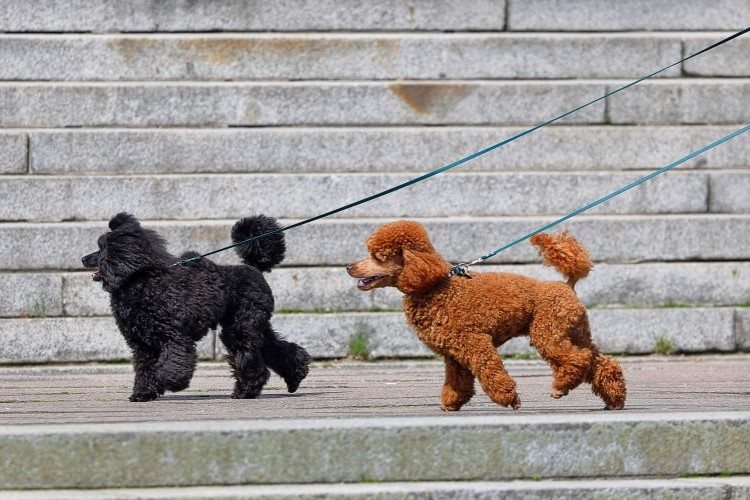
Even when you determine that it's a safe temperature to walk your dog (paired with the other elements discussed above), you'll still need to monitor surface temperatures as you walk. Hot pavement and dog paws don't mix. Remember that different surfaces will have different temperatures, and surfaces in direct sunlight will be hotter than those in the shade.
So, how do you know what's safe and what's not? A good rule of thumb is to touch the surface with the back of your hand, leaving your hand there for 5–10 seconds. If it becomes painful within that time frame, your dog's paws shouldn't walk on that surface. Either avoid going for a walk right now, move to a shady or grassy area, or put dog booties on your pup. (Dog booties should be a temporary solution and only be used if you're already outside and don't have another place to walk.)
Dogs at higher risk in hot weather
Another important factor in determining how hot is too hot to walk a dog is your pup's risk level. Here are some factors to keep in mind:
- Breed: Your dog's breed may be more affected by hot and humid weather than others. For instance, brachycephalic dog breeds are prone to overheating because of their compromised respiratory systems. In hot weather, these pups shouldn't undergo strenuous exercise or be outside for too long.
- Age: Senior dogs and puppies may be more susceptible to overheating. Puppies don't have fully developed temperature regulation like adult dogs do, and senior pups could have certain conditions that make regulating temperature harder, such as heart, kidney, or respiratory disease.
- Health: In addition to your dog's age or breed, you should consider their health, such as if they have breathing difficulties or a respiratory disease, as these can make regulating temperature more challenging. Overweight pups may also be more susceptible to heatstroke because of their extra insulating layer of body fat as well as potential difficulties with breathing properly.
- Coat type: Double-coated pups and those with thicker or darker-furred coats tend to get hotter than dogs with single coats and light-colored fur.
How to walk your dog safely in summer
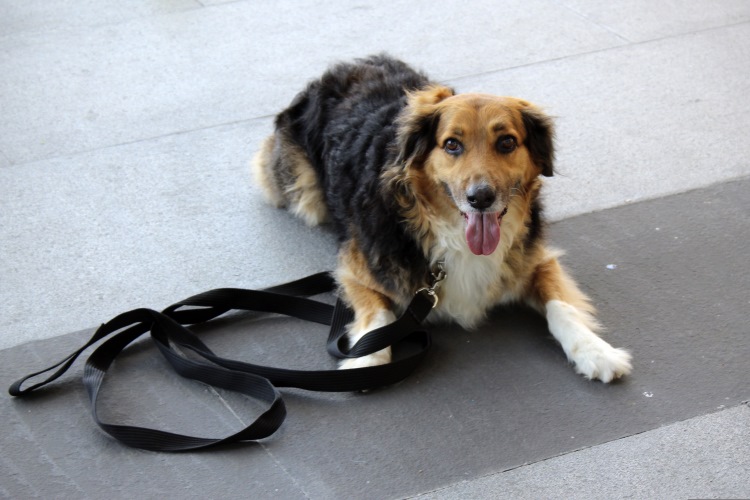
Just because it's a hot summer day doesn't mean that you can't walk your dog at all—it just means you need to take the necessary precautions to ensure that they stay safe. For example, if your area cools down enough at night, plan evening, nighttime, or early morning walks. These are also good times of day to walk your pup because there is less—or no—direct sunlight.
Additional ideas for walking your dog safely during the summer include bringing water, walking a shorter route and at a slower pace, opting for shaded areas, and turning back early if you notice any worrying symptoms in your pup.
Indoor alternatives when it is too hot
If it's just too hot to head outdoors for a walk, here are some indoor alternatives you can try:
- Do short training sessions
- Provide mental enrichment games
- Create small agility courses or play fetch in a large space, like a climate-controlled garage
- Play hide and seek, where your dog has to find another family member who's hiding in the house
- Have your dog "come" to you from different areas of the house
- Toss kibble at different lengths so that your dog must work to reach the food
- Visit dog-friendly indoor stores and walk around (learn how to train your dog to behave in public)
Signs your dog is getting too hot

One of the top summer dangers for dogs is heatstroke, so it's important to be aware of dog heatstroke signs and symptoms as you're on a walk.
- Heavy breathing or panting
- Excessive drooling
- Elevated heart rate
- Fatigue
- Restlessness
- Confusion
- Red or pale gums
- Vomiting or diarrhea
- Weakness
- Collapse
Early signs of heatstroke can happen quickly and could be due to being out in too-hot temperatures, being in the sun for too long, or exercising in a warm and humid environment—especially without easy access to fresh water. Monitor your pup while you're out and about, and make sure that you're not in these types of environments or situations for lengthy periods.
When to contact a veterinarian
If you do notice these dog heatstroke signs, stop exercise immediately, try to move them to the shade, and cool them off by dousing their body with room-temperature water. Fan them to provide a breeze against their face. If you can, get them back home or call someone to pick you both up and take you to the vet. Seeing a professional veterinarian is paramount in this situation, as heatstroke is very serious.
Summertime is ripe with fun outdoor activities, but make sure that you understand how hot is too hot to walk a dog. Always pay attention to the factors discussed here, and monitor your pup for any signs that they're overheating.
Pet Parenting is the official dog and cat blog of Trupanion, a leader in the world of pet insurance. Here you’ll find useful dog and cat care tips, important veterinary insights, and an abundance of pet lifestyle topics. All of our articles are written by real humans with a love for pets, not AI. However, please note that the views expressed here are those of the individual authors and do not necessarily reflect those of Trupanion. Articles are reviewed by veterinarians for accuracy, but they are not a substitute for professional diagnosis and treatment. Always consult with your own pet’s veterinarian for advice.


