Ready to help treat your pet to a healthy life?
It's Mud Season - Ear, Paw, and Coat Care for Dogs
By : Kathleen Crampton | Published Sep 10, 2026
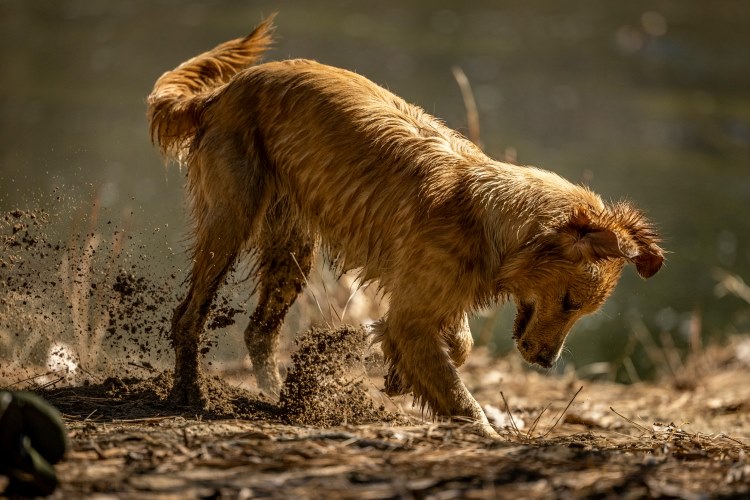
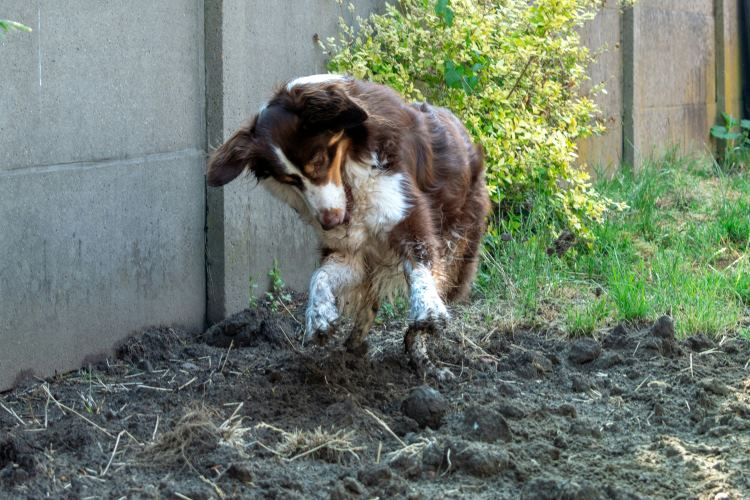
As fall rains come, so does mud. Your dog likely loves splashing in puddles, rolling around in wet grass, and traipsing through mud—but wet conditions can lead to health risks for your precious pup. That's why mud season paw care for dogs is important, as it limits the amount of moisture in and around their paws, which can be a breeding ground for bacteria.
In this guide, we'll also cover coat and ear care—both of which are crucial to address after a rainy walk or a muddy adventure. Learn how to properly clean and dry your wet dog, plus red flags to watch for.
Why fall moisture causes itch and odor
Many dogs love to play in the rain and get messy in the mud, but this type of environment can carry some health risks:
- Bacteria, such as leptospirosis and salmonellosis, from contaminated water or soil
- Fungal spores in damp soil that may lead to infection
- Moisture buildup in the ear or on the skin, which can contribute to yeast infections
Pet parents may notice that these issues are more prevalent during the rainy season—and there's a reason for that. High humidity and wet conditions are perfect conditions for bacteria, fungi, and allergens to thrive, both in the environment and on your dog.
When your pup comes into contact with water, mud, or even damp dirt, soil, or grass, and their coat, paws, and ears aren't cleaned and dried off, they're more at risk for developing infections and odors.
The post-walk routine: Paws, coat, and ears
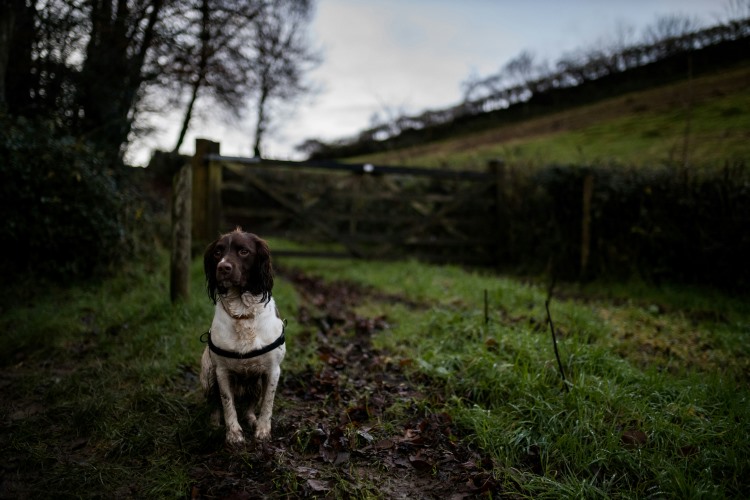
After a walk or playtime outside in the rain and mud, it's important to clean and dry your dog to minimize the risk of skin irritation and infections. Here's a brief overview of what to add to your post-walk routine, with detailed steps to follow:
- Head to a designated "cleaning zone" to clean off your pup. This could be a patio, garage, or apartment entryway.
- Clean and dry your dog's paws.
- Dry their ears.
- Dry off their coat (or bathe and dry your dog if they're particularly muddy).
How to clean and dry your dog's paws
During mud season, paw care for dogs is essential. Cleaning your dog's paws helps to prevent moisture and bacteria from becoming trapped in between their paw pads and toes or in their fur. Here's how to clean and dry paws of long-haired dogs:
- Remove any debris from their paws.
- Grab a bowl of water (not too cold, not too hot), two rags, and a towel.
- Dip the rag in the water, then gently wash your dog's paws, making sure to get in between their toes, under their nails, and into the nearby fur.
- If their paws are particularly dirty, you can use a pet-safe, vet-approved shampoo or dog cleansing wipes to gently wash their paws.
- Rinse thoroughly with clean water and a clean rag (if the first rag got really dirty).
- Use the clean towel to dry their paws. Instead of rubbing, use a patting motion. Make sure to get the areas between the toes.
- Check their paws for any cracks or cuts. If your dog has cracked paw pads, consider applying a dog paw balm, which can help to moisturize and soothe the affected areas.
How to dry dog ears
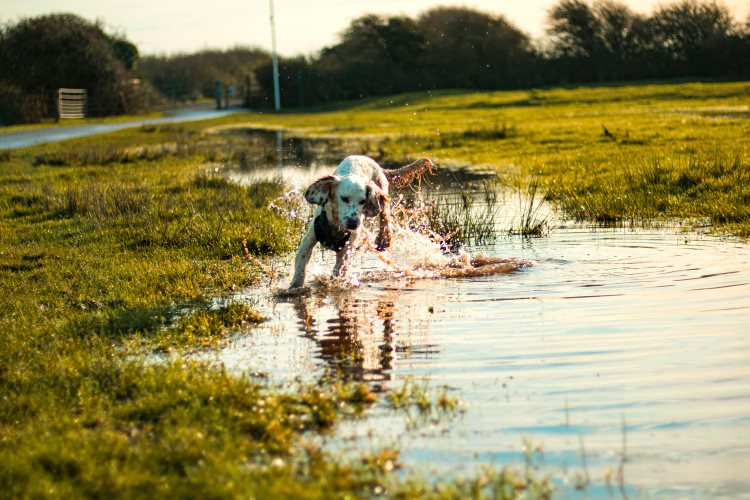
It's crucial to clean and dry your dog's ears after a rainy day walk. Depending on if their ears got dirty, you may not need to use a cleaning solution; instead just opt for drying them off, as cleaning your pup's ears too frequently can lead to irritation.
- If your dog has mud or dirt in and around their ears, use a dog-safe, vet-approved ear cleaning solution. Point the solution directly at your dog's ear, without inserting the tip into their ear.
- Gently squeeze the bottle so that the solution fills their ear. (You can also put the solution on a cotton pad or cotton ball.)
- Massage the base of their ear. Then, steer clear as you let your dog shake the ears to remove excess solution.
- Use a clean and dry cotton pad or a cotton ball to gently wipe the inside of their ear, being careful not to insert the pad too far. Then, wipe the flap of their ear.
- If the fur on top of and around their ear is wet, use a clean towel to dry off these areas.
How to clean and dry your dog's coat
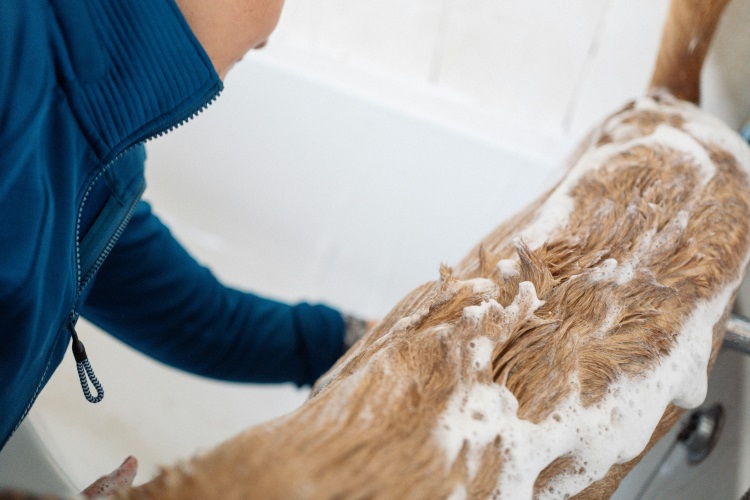
Cleaning and drying your dog's coat is necessary after a rainy or muddy adventure—not only to protect your home against a muddy mess but also to keep your dog's coat and skin healthy. While you may only need to dry off your dog's fur after a wet walk, if they got extra muddy, a bath might be necessary.
- It might sound counterintuitive, but if your dog has mud all over their coat, don't try to remove it if they're still wet. Waiting 10 to 20 minutes for it to dry can make it easier to remove.
- Once the mud has dried on their fur, use a slicker brush to gently remove the dirt. You can use a pet-safe detangler to make it easier to remove caked-on mud from long-haired breeds.
- You can also use dog grooming wipes for particularly dirty areas.
- If this brushing and spot-cleaning method didn't work to remove all the mud from your dog's coat, you might need to give them a bath. Follow these directions for how to bathe your dog. Then, proceed to the next step.
- After using grooming wipes, applying a detangler, or giving your dog a bath, make sure your pup is nice and dry. Use an absorbent towel to dry every area of their body, from face to belly to tail. For long-haired breeds, it may be necessary to use a hair dryer on its lowest, coolest setting.
What not to do
- Don't use cotton swabs to clean your dog's ears, as these can push dirt and mud farther into the ear.
- Don't use any old ear drops. Make sure your dog's ear cleaner is approved by your vet.
- Don't clean your dog's ears if you don't have to. If their ears simply got wet but not dirty, drying them off should suffice. Always follow your vet's recommendations for your dog's ear cleaning routine.
- Don't use human body wipes or shampoo on your dog. Only use dog-safe grooming wipes and shampoo.
- Don't forget to clean and dry in between your pup's toes, under and around their claws, their paw pads, and the surrounding fur.
Early warning signs of infection
When it comes to skin or ear infections, there are some warning signs and symptoms to look out for:
- Your dog's paws smell like corn chips and their paws are red or they're constantly licking the area
- Dog ear odor after walks
- Ear discharge
- Frequently shaking their head, scratching at their ears, or holding their head to the side
- Rubbing their ear on the floor or on furniture
- Loss of balance or hearing
- Hair loss around the ear
- Skin inflammation or redness
- Licking or chewing certain areas
Certain dogs may be more susceptible to infections, such as breeds with floppy ears (like Golden Retrievers), dogs that swim frequently, and those with skin sensitivities/allergies. If your dog falls into any of these categories, it's a good idea to do a routine ear, paw, and coat/skin check.
When to see a vet
If you notice any of the above symptoms or behaviors, schedule an appointment with your vet. Even if you think your pup has an ear or skin infection, don't order over-the-counter products just yet. Your vet has a complete history of your dog and can do a proper assessment of their symptoms to come to a diagnosis and treatment plan. If certain products or medications are needed, they'll be sure to recommend those that are safe for your furry pal.
How pet insurance can help in the fall
Even with these care tips for preventing ear, coat, and paw irritation, your pup could still develop an infection or experience inflammation. This is where pet insurance can help. With a Trupanion dog insurance policy, your pup can get the care they need for covered issues, as coverage helps to pay for the cost of certain treatments.
During mud season, paw care for dogs, as well as coat and ear care, is crucial. Make sure your pup is protected with Trupanion dog insurance.
Pet Parenting is the official dog and cat blog of Trupanion, a leader in the world of pet insurance. Here you’ll find useful dog and cat care tips, important veterinary insights, and an abundance of pet lifestyle topics. All of our articles are written by real humans with a love for pets, not AI. However, please note that the views expressed here are those of the individual authors and do not necessarily reflect those of Trupanion. Articles are reviewed by veterinarians for accuracy, but they are not a substitute for professional diagnosis and treatment. Always consult with your own pet’s veterinarian for advice.


