Ready to help treat your pet to a healthy life?
How to Introduce Cats to Each Other
By : Nikki Edwards | Published Nov 10, 2026

The best way to introduce cats to each other is slowly and in stages. Start by giving the new cat a room of their own, let both cats get to know each other's scent, and move to short, supervised meetings only once both seem relaxed. Most cats can learn to share a home when the introduction moves at the pace of the more cautious cat.
Below, you'll find a step-by-step process, the signs that show whether things are on track, how long it usually takes, and when to involve your veterinarian.
Why proper cat introductions matter
Cats are territorial. Your resident cat knows your home by scent, so a new cat who appears without warning reads as an intruder rather than a roommate. Putting two unfamiliar cats in the same room right away can lead to fear, stress or fighting, and a rough first meeting can make every step after it harder.
Some caution is expected. Hissing, staring or a puffed tail in the first days usually means a cat is unsure, and it doesn't mean the two will never get along. A gradual introduction gives both cats time to decide the other isn't a threat.
How to introduce cats to each other

Give the new cat a separate space
Before your new cat comes home, set up a room they can have to themselves for the first several days. A spare bedroom or office works well. Stock it with:
- Food and water bowls
- A litter box
- A bed and a few hiding spots, such as a covered bed or an open carrier
- Toys and a scratching post
This room lets your new cat settle in without facing your resident cat, and it keeps your resident cat's routine and territory largely unchanged. Wait until both cats are eating, using the litter box and behaving normally before you move on.
Start with scent swapping
Cats learn a lot through smell, so let them meet that way first. Swap bedding, blankets or toys between the two spaces so each cat can investigate the other's scent on their own terms. You can also gently rub a clean towel on each cat's cheeks and leave it near the other cat's food bowl.
Once your new cat is comfortable, let each cat explore the other's space while the other is in a different room. The UC Davis School of Veterinary Medicine suggests rotating rooms this way daily for at least two to three days.
Create positive associations
Feed the cats or offer treats on opposite sides of a closed door. Start with the bowls far enough from the door that both cats eat calmly, then move them a little closer over several days so each cat connects the other's smell and sounds with something good. If either cat stops eating or growls at the door, move the bowls back and slow down.
Let the cats see each other
When both cats eat calmly near the door, it's time for visual contact. A tall baby gate, a screen door or a door propped open a few inches lets the cats see each other without being able to reach each other. Keep these sessions short, pair them with meals or treats and watch body language closely. It's best to end each session while both cats are still calm.
Begin short supervised meetings
Once both cats seem comfortable seeing each other, let them share a room for a few minutes while you watch. During these first meetings:
- Keep meetings brief, especially at first
- Make sure each cat has an escape route and somewhere high to retreat
- Don't pick up either cat or push them toward each other
- Use play or treats to keep the mood relaxed
- End the meeting before either cat becomes overwhelmed
Gradually increase their time together
As the cats grow more relaxed, lengthen their time together and supervise less closely. Keep food, water, litter boxes and resting spots in several areas of your home so neither cat has to compete for them. The American Association of Feline Practitioners recommends one litter box, food bowl, water bowl, bed and scratching post per cat, plus one extra. Until you're confident the two are getting along, return the new cat to their room whenever you can't supervise.
Signs your cats are getting along
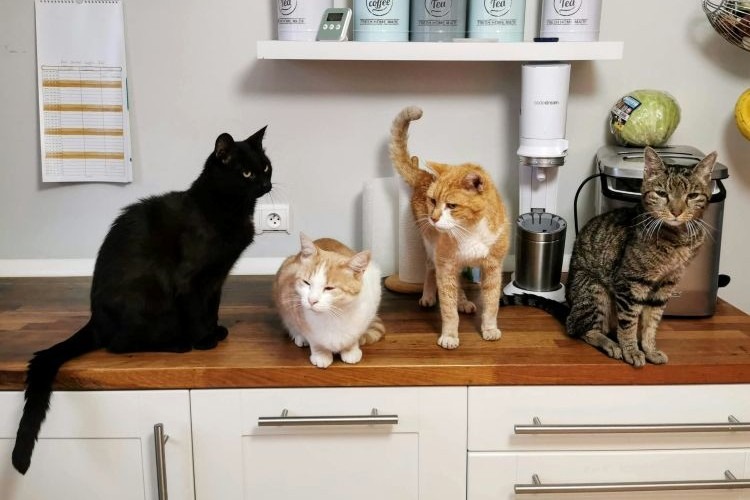
Watch how the cats behave around each other over several days rather than judging a single moment. These signs can help you tell whether the introduction is on track:
Positive signs | Warning signs |
|---|---|
Relaxed body posture | Persistent growling |
Calmly sharing a room | Chasing or cornering |
Playing without escalataion | Swatting that escalates |
Eating normally | Blocking food or litter boxes |
Curious sniffing | Persistent hiding or fear |
Resting near each other | Fighting or biting |
Occasional hissing during early introductions doesn't mean the process has failed, because hissing is one way cats set boundaries. What matters more is whether tension eases over time or builds toward chasing, cornering or fighting.
How long does it take for cats to get along?
There's no set timeline for cats to get along. Some cats adjust within a few days, while others need several weeks or longer, and the process can take anywhere from a few days to a few months. Age, personality and past experience with other cats all play a part.
Let your cats' behavior decide when to move to the next step, not the calendar. Moving ahead because a certain number of days has passed, before one cat is ready, can mean starting over, which takes longer in the end.
Introducing a kitten to an older cat

Introducing a kitten to an adult cat follows the same steps, with a few differences. Kittens have plenty of energy and little sense of boundaries, and an older cat can quickly become overwhelmed by a kitten who wants to pounce and play all day. To help both cats:
- Give your older cat high perches and quiet rooms the kitten can't easily reach
- Supervise play and redirect the kitten with toys when your older cat has had enough
- Schedule daily play sessions to burn off the kitten's energy
- Keep your older cat's feeding times, sleeping spots and one-on-one time with you the same
A hiss or swat from an older cat is often a fair warning to a kitten who's playing too rough. Step in if it escalates, or if your older cat starts hiding or avoiding favorite spots.
What to do if your cats don't get along
If an introduction stalls or a meeting turns into a fight, separate the cats again and return to an earlier step where both were calm, such as scent swapping or eating near a closed door. Then move forward more slowly than before.
Check that each cat has its own food, water, litter box and resting spots, since competition over these resources is a common source of conflict. Don't punish hissing, growling or fearful behavior. Punishment adds stress and can teach a cat to link the other cat with something unpleasant. If you need to break up a fight, keep your hands out of it and place a pillow or cushion between the cats to break their eye contact.
When to talk to your veterinarian

It’s incredibly important that every cat in your home should have a recent veterinary checkup before the introduction begins, so you know both are healthy going in. Once it's underway, keep in mind that stress can affect a cat's health. Contact your veterinarian if either cat:
- Stops eating
- Has significant changes in litter box habits
- Stays hidden for long periods
- Shows signs of illness or severe stress
- Is injured during a fight
- Develops persistent aggression or other significant changes in behavior
Have any bite wound checked, even one that looks small. A cat bite carries bacteria into the wound, which can lead to infection and a painful abscess. Your veterinarian can also look for medical causes of aggression, such as pain, and may recommend a behavior plan or a referral to a veterinary behaviorist.
Protect both cats with Trupanion pet insurance
Even a careful introduction can bring surprises, from a bite wound that turns into an abscess to a new, sudden illness. Trupanion cat insurance pays up to 90% of eligible veterinary costs for new illnesses and injuries after your deductible, with no payout limits for the life of your pet. At participating hospitals, VetDirect Pay™ lets Trupanion pay your veterinarian directly at checkout.
Because conditions that show signs or symptoms before coverage begins are considered pre-existing, the best time to enroll your new cat or kitten is soon after they come home. By enrolling them while they’re healthy, if either cat ever needs care, you can focus on helping them heal and get back to sharing the sunny spot by the window.
Terms & Conditions apply. See the website for our policy at trupanion.com.
Frequently asked questions
Is hissing normal when introducing cats?
Yes. Hissing is a normal way for cats to show they're uncomfortable or need space, and it's common in the first days or weeks. It becomes a concern when it continues without improvement or leads to swatting, chasing or fighting.
How long does it take for cats to get along?
It varies from cat to cat. Some get along within days, while others need several weeks or a few months, so let both cats' behavior set the pace rather than a fixed schedule.
Should I let my cats fight when they first meet?
No. Letting cats fight it out can cause injuries and make them more fearful of each other. If a meeting turns aggressive, separate the cats safely and go back to an earlier step in the introduction.
How do I know if my cat is accepting the new cat?
Signs of acceptance include relaxed body posture around the other cat, calmly sharing a room, eating normally, playing without escalation and resting near each other. Grooming each other or sleeping curled up together are strong signs the cats have bonded.
Is it easier to introduce a kitten to an adult cat?
Often, yes, because adult cats tend to see kittens as less of a threat. A kitten's energy can still overwhelm an older cat, though, so supervision, separate spaces and places to retreat matter just as much.
Pet Parenting is the official dog and cat blog of Trupanion, a leader in the world of pet insurance. Here you’ll find useful dog and cat care tips, important veterinary insights, and an abundance of pet lifestyle topics. All of our articles are written by real humans with a love for pets, not AI. However, please note that the views expressed here are those of the individual authors and do not necessarily reflect those of Trupanion. Articles are reviewed by veterinarians for accuracy, but they are not a substitute for professional diagnosis and treatment. Always consult with your own pet’s veterinarian for advice.


