Ready to help treat your pet to a healthy life?
When Can I Start Taking My Puppy Out in Public?
By : Trupanion Staff | Published Dec 19, 2024

Being out in public with your dog is one of the many joys of having a pet. But going out is a tad more complicated when your furry friend is still young. A puppy's earliest weeks are a fragile time, and too much exposure to the outside world can be unsafe. So, when should you actually start taking your puppy out in public?
The answer, of course, varies from pet to pet. Some dogs may be ready faster than others, and it depends on both their health and temperament. Protecting your pet with puppy insurance is a great first step to help keep them safe. But in order to prevent socialization issues and ensure the safety of everyone involved, it's important to understand what makes public outings risky for young dogs and how best to navigate them. Whether or not this is your first puppy, here’s what you should know about taking a puppy out for the first time.
Why can't puppies go outside right away?
When you get a pet — especially an adorable new puppy ֫— it’s normal to want to take them out and let others bask in their cuteness. But you’ll have to wait for your veterinarian’s approval before doing so.
Just like human babies, young puppies have not yet built up a defense against illnesses. They can get sick from other dogs or from unclean environments. Common conditions like canine distemper and canine influenza are very contagious and may be difficult for your puppy to overcome.
For this reason, it's a good idea to limit your puppy's outdoor time until they are fully vaccinated. However, it can take up to 22 weeks for a puppy to receive all their vaccinations. Be sure to talk with your veterinarian and get the go-ahead from them for your puppy to be around others.
The critical socialization window
Even though you’ll need to wait for veterinary approval for socialization, it’s important not to wait indefinitely. All young dogs need exercise and socialization for healthy development. This makes taking a puppy outside safely a little complex.
Your puppy's first 3 months of life are an important socialization period. Their development at this stage will greatly affect their personality. Exposing them to a range of people and places can make them more comfortable with new things in the future.
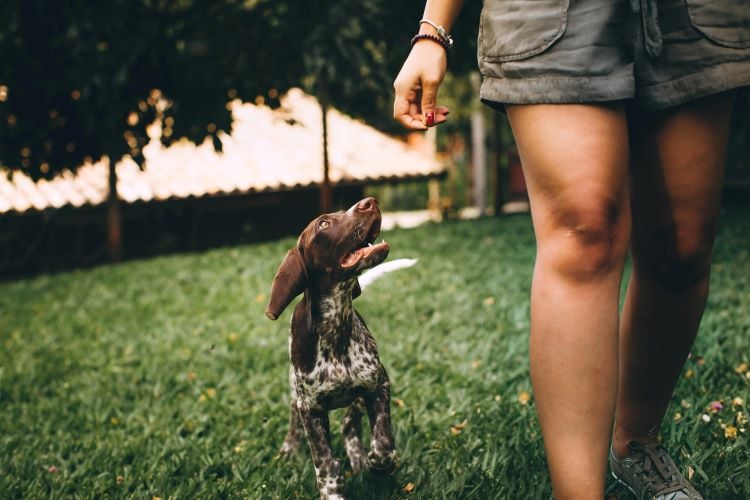
Puppy socialization means helping your dog get used to all kinds of sights, sounds, and smells. Done right, it can help your dog experience the world positively. Plus, it will teach them how to behave in new spaces.
Puppy vaccination considerations
Because their immune system is new and not built up, your pet will need certain vaccines before they can safely be around other pets and people. Puppies typically start their vaccinations around 6 to 8 weeks of age. DHPP, which addresses distemper, hepatitis, parainfluenza, and parvovirus, is one of the core vaccines most puppies will need. Boosters every few weeks means a puppy isn't fully protected until they're about 20 weeks old. Rabies is another essential shot, which cannot be given until your pup is at least 12 weeks old and takes 28 days to take effect.
Other vaccines will depend on local regulations as well as your veterinarian’s recommendations. Common ones for puppies include:
- Bordetella
- Lyme disease
- Leptospirosis
Unsure of what your puppy needs for where you live and their lifestyle? Consult with your veterinarian about what shots will most benefit your pet throughout their first few years.
Introducing a puppy to public spaces
To socialize your puppy safely, start with situations you can control. This can mean taking your puppy to visit friends and family, along with their healthy, vaccinated dogs. Socializing your puppy in a familiar space makes them less likely to catch unwanted illnesses.
Other animals, like cats, can also be good sources of socialization. Most diseases cannot be transmitted across species. This can give your puppy a chance to get out with minimal risk.
Once your dog is fully vaccinated, you can start bringing them into public places. With their immunizations covered, your goal is to present your puppy with a range of positive social experiences. Pet stores and local parks are good places to interact with unfamiliar dogs.
Puppy-friendly outings
Taking your dog to puppy-friendly activities can also give their socialization a boost. Consider looking for puppy classes in your area. These classes require pet owners to provide proof of vaccination to ensure each dog's safety. That way, the puppies can meet other dogs in a safe space.
Puppy classes double as a great way to give your dog exercise. Plus, they can help you get a head start on obedience training. Usually, professional trainers oversee the interaction.
Common mistakes to avoid
Try to avoid doing too much at once. Getting your puppy outside is important, but it can also be overwhelming. Take things slow as you move beyond their comfort zone.
Keeping socialization positive is also key. Feel free to reward your pup with praise and treats with every new experience. And don't forget to manage your own emotions. Your puppy can usually tell when you're nervous or upset. Stay positive and your puppy is more likely to enjoy their socialization.

Protect your puppy before going out
As you prepare to introduce your puppy to the outside world, use your newfound knowledge to guide you. Taking advantage of puppy-friendly activities and controllable environments can help you give your puppy the exercise and social experience they need to grow — minus the risk.
Keeping your dog safe means planning for their protection, and pet insurance is a great place to start. If you haven’t done so already consider signing up for dog insurance today to get the most out of your puppy's coverage.
Learn why now is the best time to get pet insurance for your dog.
Pet Parenting is the official dog and cat blog of Trupanion, a leader in the world of pet insurance. Here you’ll find useful dog and cat care tips, important veterinary insights, and an abundance of pet lifestyle topics. All of our articles are written by real humans with a love for pets, not AI. However, please note that the views expressed here are those of the individual authors and do not necessarily reflect those of Trupanion. Articles are reviewed by veterinarians for accuracy, but they are not a substitute for professional diagnosis and treatment. Always consult with your own pet’s veterinarian for advice.


